


Why Federal Criminal Searches Matter in Background Checks
A background check can look complete and still miss the one record that matters most.
That is the risk when an organization relies only on county or state criminal searches. Those searches are valuable, but they do not cover every court system. Some of the most serious offenses are handled in federal court, and those records may not appear in a county courthouse search or a statewide database.
The case of Jared Fogle, the former Subway spokesperson, shows why this gap matters. Fogle had been a familiar public figure for years. Before his federal criminal case, he had no widely known criminal history. Then, in 2015, he pleaded guilty in federal court to serious crimes involving child sexual abuse material and traveling across state lines to engage in sexual acts with a minor.
For employers, volunteer organizations, schools, healthcare providers, and youth-serving groups, the lesson is clear: a background screening program is only as strong as the court systems it checks.

County, state, and federal searches are not the same
Many people hear “criminal background check” and assume it means one full search of every possible record. That is rarely how it works.
Criminal records are spread across different systems. Each system has its own scope, limits, and update patterns. A strong background check uses the right mix based on the role, the risk, and the legal requirements involved.
County criminal searches
County searches are often the foundation of a criminal background check. They look at records filed in a specific county court. Because many criminal cases are prosecuted at the local level, county searches can be highly useful.
They may uncover records such as:
Misdemeanor charges
Felony charges handled in county court
Pending cases
Dispositions and sentencing information
The problem is geography. A county search only tells you what is in that county. If someone lived, worked, studied, or committed an offense somewhere else, that court may not be included unless the search is expanded.
Statewide criminal searches
A statewide search can help broaden coverage. It may pull from a state repository or court system across multiple counties.
That sounds complete, but state systems vary a lot. Some are updated quickly. Some are incomplete. Some exclude certain court levels. Some charge extra fees or require special handling. A statewide search can be useful, but it should not be treated as a guaranteed replacement for county-level searches.
Federal criminal searches
Federal searches cover cases prosecuted in the federal court system. These are not county cases. They are handled separately, with separate records and separate courts.
Federal cases may involve conduct such as:
Crimes across state lines
Certain financial crimes
Drug trafficking
Weapons offenses
Immigration-related offenses
Crimes involving federal agencies or property
Certain child exploitation offenses
Large-scale fraud or internet-based crimes
This is where many screening programs fall short. If the background check does not include a federal court search, those records can be missed.
The Jared Fogle case shows the risk of an incomplete search
Jared Fogle became nationally known through Subway’s advertising after saying he lost more than 200 pounds by walking and eating the chain’s low-calorie sandwiches. His story became part of the company’s public image for more than a decade.
That public image ended in 2015 after federal criminal allegations surfaced. Fogle later pleaded guilty in federal court to distributing and receiving child sexual abuse material, commonly charged under federal child pornography statutes, and traveling across state lines to engage in sexual acts with a minor.
He received a sentence of 15 years and 8 months in federal prison. Public federal inmate information has listed him at the Federal Correctional Institution in Englewood, Colorado, with a projected release date of March 24, 2029.
Before those convictions, Fogle did not have a widely known criminal record. That point matters. A person can have no prior county-level convictions and still later be convicted of a serious federal offense.
Now consider a future hiring scenario after release. If a person with a federal conviction applied to work or volunteer around children, and the organization ran only county or statewide checks, the federal case might not appear. That gap could expose children to danger and put the organization in a crisis it may never recover from.
This is not about fear. It is about matching the search to the risk.
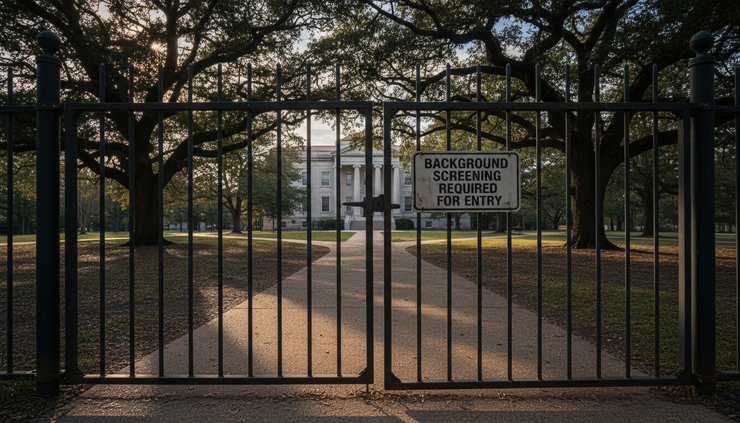
Why federal records may not appear in other searches
A federal case is not just a local case with a different label. It belongs to a different court system.
That means a county clerk’s office may not hold the record. A statewide criminal repository may not include it. A multi-jurisdictional database may flag something, but it may also miss records, lack complete details, or require confirmation through an official court source.
This creates a dangerous assumption. An employer may see “clear” results from a county or statewide check and believe the search found everything. In reality, it may have found everything in that search type, not everything in the person’s criminal history.
There is a major difference between these two statements:
“No record found in the county search.”
“No criminal record exists.”
This means no matching record was found in the county searched.
This is a much broader claim and may not be supported by limited searches.
A careful screening program avoids overpromising what a search can prove. It treats each component as one part of a larger process.
Federal crimes can be highly relevant to workplace risk
Not every federal conviction has the same bearing on every job. A decades-old federal tax offense may not carry the same relevance for a warehouse role as a recent federal child exploitation conviction would for a daycare role.
The key is relevance.
A federal criminal record may be especially relevant when the position includes:
Access to children, older adults, or vulnerable people
Work in homes, schools, churches, camps, or care facilities
Financial authority or access to sensitive accounts
Driving across state lines
Access to confidential data
Work involving regulated industries
Public trust or unsupervised contact with the public
Federal searches are not only about finding the worst possible conduct. They are about seeing a fuller picture so decision-makers can apply fair, job-related standards.
A comprehensive screen does not mean an automatic rejection. It means the organization has the information needed to make a careful decision.
The limits of “national” criminal database searches
Some screening packages include a “national criminal database” search. The name sounds broad, and these tools can be helpful as a pointer. They may identify possible records across many jurisdictions.
Still, they have limits.
Database searches may include incomplete data, stale information, missing identifiers, or records that need verification. They may not include all federal criminal records. They may also return possible matches that require court-level confirmation before an employer takes action.
A national database search should not replace direct court searches where risk is high. It can help cast a wider net, but it should not be the only net.
A better approach is layered:
Use identity verification to confirm the applicant’s information.
Run county searches based on address history and other relevant locations.
Add statewide searches where they provide meaningful coverage.
Include federal criminal searches as a standard part of the package.
Verify any possible records before making employment decisions.
Follow applicable notice and consent requirements.
This layered structure reduces blind spots without treating every record as equal.

When federal searches should be standard
Some organizations add federal searches only for executives or finance roles. That approach is too narrow.
Federal searches should be standard when the potential harm from a missed record is high. This includes roles involving children, patients, residents, students, financial assets, trade secrets, public safety, or unsupervised access to private spaces.
In many cases, federal searches also make sense as a baseline part of a general employment screening program. The added search can help close a major gap, especially when a candidate’s address history spans multiple states or when the role carries trust-based responsibilities.
A practical screening policy should answer these questions:
Which roles require federal criminal searches?
Are federal searches included for all employees or only certain positions?
How far back will the search go, based on law and policy?
How will pending cases be handled?
Who reviews potential records?
How does the organization evaluate job-relatedness?
What process gives the candidate a chance to respond?
The goal is not to collect information for its own sake. The goal is to create a fair and consistent process that protects people, supports compliance, and reduces preventable risk.
Compliance still matters
Criminal background checks must be handled carefully. Federal, state, and local laws may control how searches are conducted and how results are used. Employers often need written authorization before obtaining a background report from a screening company. If they may take adverse action based on the report, they may need to follow specific notice steps.
Some states and cities also limit when employers can ask about criminal history or how they may consider older records, arrests, sealed records, or expunged cases.
A fair process should include:
Clear written screening criteria
Consent before the check, when required
Consistent searches for similar roles
Review of the nature and gravity of any offense
Consideration of time passed since the conduct
A connection between the record and the role
A chance for the candidate to dispute inaccurate information
This article is for general information only and is not legal advice. Organizations should work with qualified legal counsel and reputable screening providers when building or updating a background check program.
The cost of missing a federal record can be severe
The direct cost of adding a federal search is usually small compared with the possible cost of missing a serious conviction.
A missed record can lead to:
Harm to customers, clients, patients, students, or staff
Negligent hiring claims
Regulatory scrutiny
Loss of trust with families or the public
Internal morale problems
Insurance complications
Long-term reputational damage
Some damage cannot be repaired with a statement, policy update, or leadership change. When an organization serves children or vulnerable people, a preventable screening failure can become the defining story people remember.
The Fogle case is a stark reminder because the public image was so familiar. Many people knew the spokesperson. Far fewer would have predicted the federal conviction that followed. That gap between public persona and court record is exactly why screening must rely on records, not reputation.

Build a screening program that closes the right gaps
No background check can predict every future action. No search type is perfect. Yet that does not excuse preventable blind spots.
A good program uses multiple sources, verifies potential matches, follows the law, and applies results in a fair, role-related way. County and statewide searches still matter, but they do not replace federal court searches. For many roles, leaving out the federal layer creates a gap that is too large to ignore.
The takeaway is simple: federal criminal searches should be a standard part of a comprehensive background screening program, especially for positions of trust. When safety, reputation, and public confidence are on the line, a partial search is not enough.